Searching for the right daycare in San Francisco or down the Peninsula often feels like a second job. Between the waitlists, the morning highway math, and the emotional weight of handing your little one to someone else, it’s easy to feel completely overwhelmed.
But underneath the spreadsheets and the tour schedule, this search isn’t really about finding a place for your child to spend the day. You’re looking for a second home somewhere your child is truly seen, your family is supported, and the teachers are genuinely glad to be there.
At Meaningful Beginnings, we believe that when children, families, and teachers form a balanced tripod of mutual respect, a love of learning follows naturally. Here’s what we’d tell a friend to look for
1. Beyond the commute: the trust factor
A location along your route is genuinely practical nobody should apologize for caring about that. But the emotional logistics matter just as much, and they’re harder to spot on a map.
The right program acts as an extension of your parenting team. That looks like:
- Real emotional security. That gut-level calm when you say goodbye in the morning. You’ll know it when you feel it, and you’ll know when it’s missing.
- Communication you don’t have to chase. Photos, notes, a teacher who catches you at pickup with something specific about your child’s day so you stay connected to the small triumphs.
- A support system for you, too. Educators who understand what it’s like to raise young children here, now, in this neighborhood, at this pace.
There’s science underneath that gut feeling. Harvard’s Center on the Developing Child calls it “serve and return“: a baby babbles or reaches out, an adult answers with eye contact or words, and that small exchange builds the brain connections behind language and social skills. The warmth you notice between a teacher and a child on your tour isn’t a pleasant extra. It is the curriculum.
On your tour: notice whether a teacher looks up when a child looks at them, and how quickly. That tells you more than any brochure.
2. A space where curiosity is the curriculum
Young children learn by moving, touching, and asking. So when you walk into a classroom, let the room speak first.
Loris Malaguzzi, who founded the Reggio Emilia schools in Italy, called the environment the “third teacher” a space arranged to invite exploring rather than to overstimulate. In a Reggio-inspired program, look for:
- Teachers who follow the child. If a toddler becomes fascinated by the way morning light comes through a green leaf, a good teacher leans in shadows and textures become the morning instead of moving the group along.
- Materials with no single right answer. Sand, water, clay, wood. Open-ended things beat flashing plastic for building spatial thinking and early problem-solving.
- A predictable “yes” space. Somewhere a child feels safe enough to take small, age-appropriate risks climbing a little higher, trying a new friend. This is where kindergarten readiness quietly gets built, too. Harvard describes play as how children strengthen executive function attention, working memory, self-control. Exactly what school will ask of them.
On your tour: are the children’s own drawings and block towers on the walls and shelves, or only teacher-made decorations?
3. The quality marker nobody mentions: how teachers are treated
When you tour, look past the pretty shelves and look at the adults. Are they calm? Down on the floor? Do they seem happy to be there?
This is the most telling signal in early childhood education and the least discussed. UC Berkeley researchers put it plainly: “How early educators are treated affects how our children learn.” Early educators earn a national median of $13.07 an hour, which is why turnover in this field runs so high.
That turnover lands on your child. Infants and toddlers form more secure attachments when they stay with the same caregiver for at least 12 months and every teacher who leaves resets that clock.
Teachers who feel respected bring things no curriculum can supply: the patience for a stormy toddler afternoon, the creativity to change plans around what the children are curious about this morning, and the steadiness that lets your child settle in and stay settled.
On your tour, ask: “How long has this teacher been here, and how long do teachers usually stay?” A director who answers specifically and gladly is telling you something real.
4. Intention over convenience
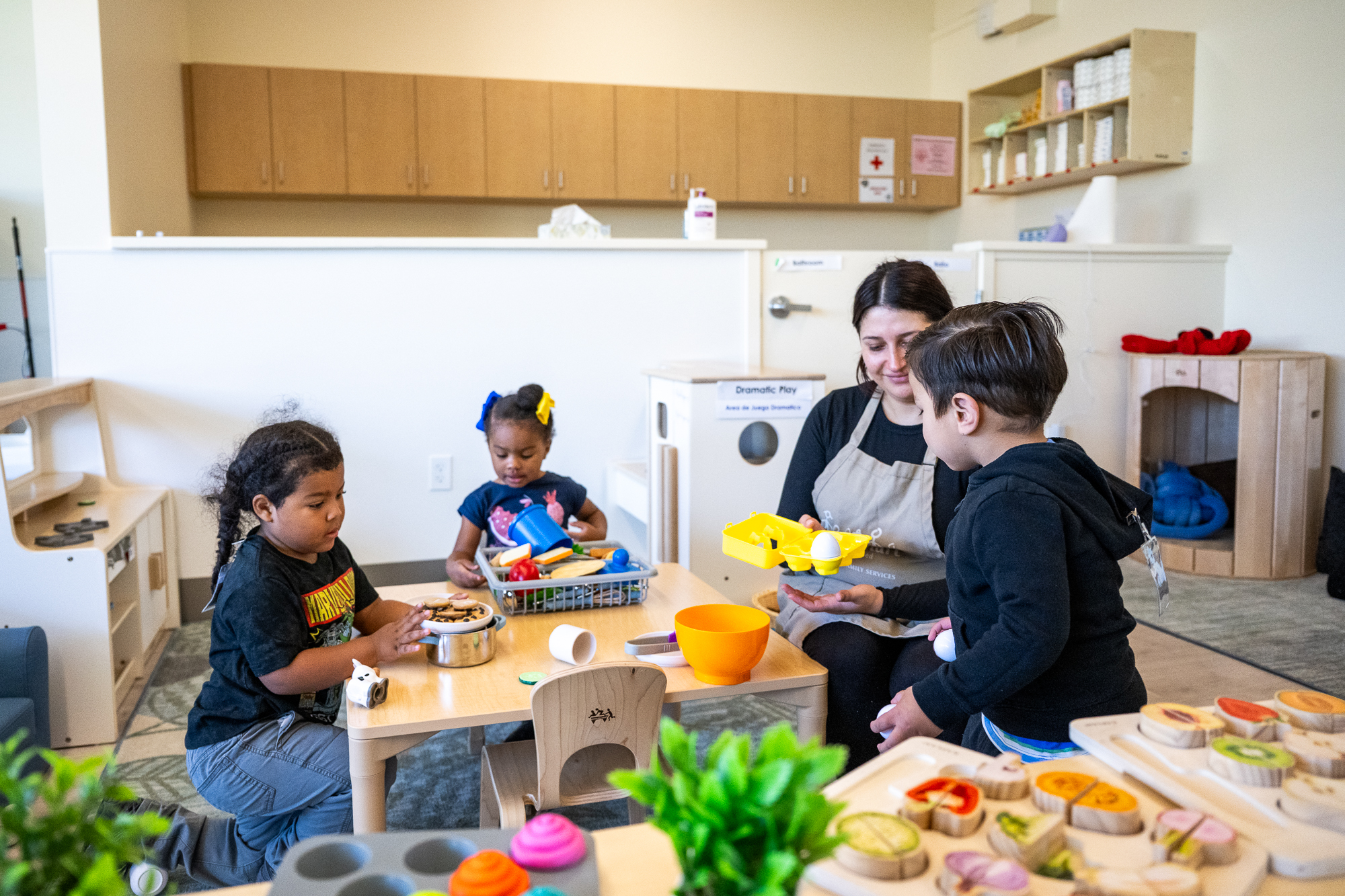
The closest daycare isn’t always the right one. More local families are looking past a supervision-only model and choosing programs where the routines, the materials, and the way conflict gets handled all reflect an actual philosophy.
Then there’s the unglamorous five minutes: look the center up in California’s Care Facility Search, which covers five years of history including complaint investigations. If something turns up, ask the director about it. A program with nothing to hide will walk you through it without flinching.
From searching to belonging
Starting care is a milestone for your whole family, not just your child. When you focus on the relationships, the environment, and how the grown-ups are cared for, the search stops feeling like comparison shopping.
These years shouldn’t be a hurdle to get through. They should be a beginning worth having.
We’d love to meet you. Meaningful Beginnings serves families at our Taraval and Laguna Honda campuses in San Francisco, and at our San Mateo center on the Peninsula. Schedule a tour and bring your hardest questions those are our favorite kind.
Frequently Asked Questions
What does a Reggio Emilia–inspired approach look like for an infant?
Deep respect, body autonomy, and unhurried discovery. Rather than spending the day in containers and seats, infants get floor freedom to move as their bodies are ready, safe textured objects to mouth and turn over, and a primary caregiver who knows their particular cues.
How can a center help with morning separation anxiety?
With a warm ritual you can count on a special handshake, a wave at the window, the same words every time. The AAP’s HealthyChildren.org suggests practicing the goodbye before you need it and keeping it short and affectionate: “If you linger, the transition time does too. So will the anxiety.” A good teacher scoops your child up the moment you go, and sends you a photo a few minutes later so you can breathe.
Why play instead of worksheets for school readiness?
Because play is where the real skills are built. Harvard’s Center on the Developing Child describes play as how young children strengthen attention, working memory, and self-control. Children who play well learn to problem-solve, share, and speak up for themselves which serves them far longer than knowing their letters early.
About the Author:
This article was written by the Meaningful Beginnings Education Team. Our educators are dedicated to creating nurturing, Reggio Emilia–inspired environments where children are seen as capable, curious, and full of potential. Through thoughtful observation, collaboration, and meaningful experiences, we support each child’s growth, socially, emotionally, and intellectually while partnering closely with families every step of the way.