When we picture getting a child ready for kindergarten, our minds jump to the academic basics—tracing letters, counting blocks, naming colors. But ask an experienced preschool teacher what actually predicts a smooth start, and they’ll tell you it isn’t any of those. It’s social-emotional.
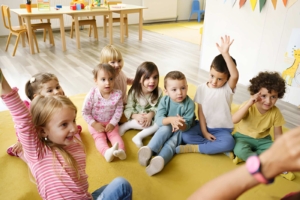
Between three and five, a child’s inner world expands enormously. They’re moving out of the parallel play of toddlerhood and into something far more complicated: cooperative play, real friendships, and the first flickers of self-awareness.
Knowing what to expect changes everything about how these years feel. It turns “Why is my child melting down over a broken crayon?” into “Ah—their brain is practicing emotional regulation right now.” Here’s the roadmap.
What emotional milestones actually look like
Unlike walking or losing a tooth, emotional milestones are quiet. They show up as small behavioral shifts—the building blocks of a child’s growing ability to name feelings, manage impulses, show empathy, and hold onto a friendship.
Harvard’s Center on the Developing Child compares the underlying skills to an air traffic control system—working memory, mental flexibility, and self-control, all managing a lot of incoming traffic at once. Children aren’t born with these skills. They’re born with the potential to develop them, and the preschool years are when most of that construction happens.
Here are the five milestones to watch for
1. From basic labels to complicated feelings
By three, most children can tell you they feel happy, sad, or mad. Somewhere in the fourth and fifth years, the palette widens. They start to experience—and sometimes name—frustration, pride, jealousy, embarrassment. At home: Give the feeling its real name in the moment. When the block tower falls, instead of “I know you’re mad,” try: “That looks so frustrating. You worked really hard on that.” You’re not fixing anything. You’re handing them a word for what’s happening inside.
2. The first attempts at self-regulation
Preschoolers are just beginning to manage big feelings, and the toolkit is very much under construction. Full-blown toddler tantrums usually taper off, but outbursts are still completely normal when a child is overtired, overstimulated, or genuinely disappointed. ZERO TO THREE’s guidance on challenging behavior is reassuring here: staying calm and validating the feeling helps far more than a big reaction, a punishment, shaming, or a demanded apology. At home: Narrate your own regulation. “The noise in here is a lot for me right now. I’m going to take three big breaths.” Children learn this by watching someone they love do it first.
3. The awakening of empathy
Around four, something remarkable happens: children start to grasp that other people have feelings and perspectives entirely separate from their own. The CDC lists comforting a crying friend among its four-year social-emotional milestones. You may notice your child go still when another kid falls at the park—then offer a hug, or a favorite toy.
At home: Notice it out loud without turning it into a lesson. While reading, try: “Look at her face. How do you think she’s feeling? What might help?”
4. Real friendships, and real negotiation
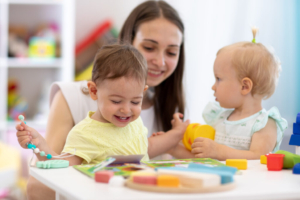
Playing next to another child becomes playing with them. That shift is a big one, and it comes bundled with sharing, rule-making, and a steady supply of small conflicts—which is exactly the point. The squabbles are the curriculum. At home: Resist solving it instantly. Give them a beat, then coach rather than referee: “You both want the red truck. What could we do so you each get a turn?”
5. “I can do it myself!”
That sentence becomes a daily anthem somewhere around three, and it should. Testing limits and discovering their own capability is how self-esteem gets built from the inside rather than handed down.
At home: Praise the effort, not the child. NAEYC recommends skipping the generic “Good job!” in favor of describing what you actually see—”I notice,” “I see you.” So instead of “You’re the best artist ever,” try: “You used so many colors, and you kept going even when the paper tore.” One is a verdict. The other is something they can do again tomorrow.
How we hold this at Meaningful Beginnings
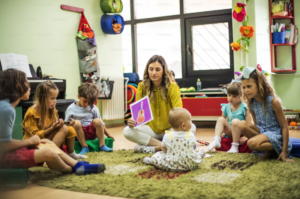
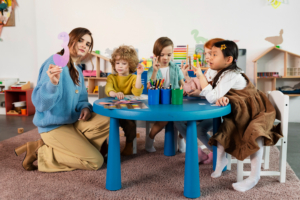
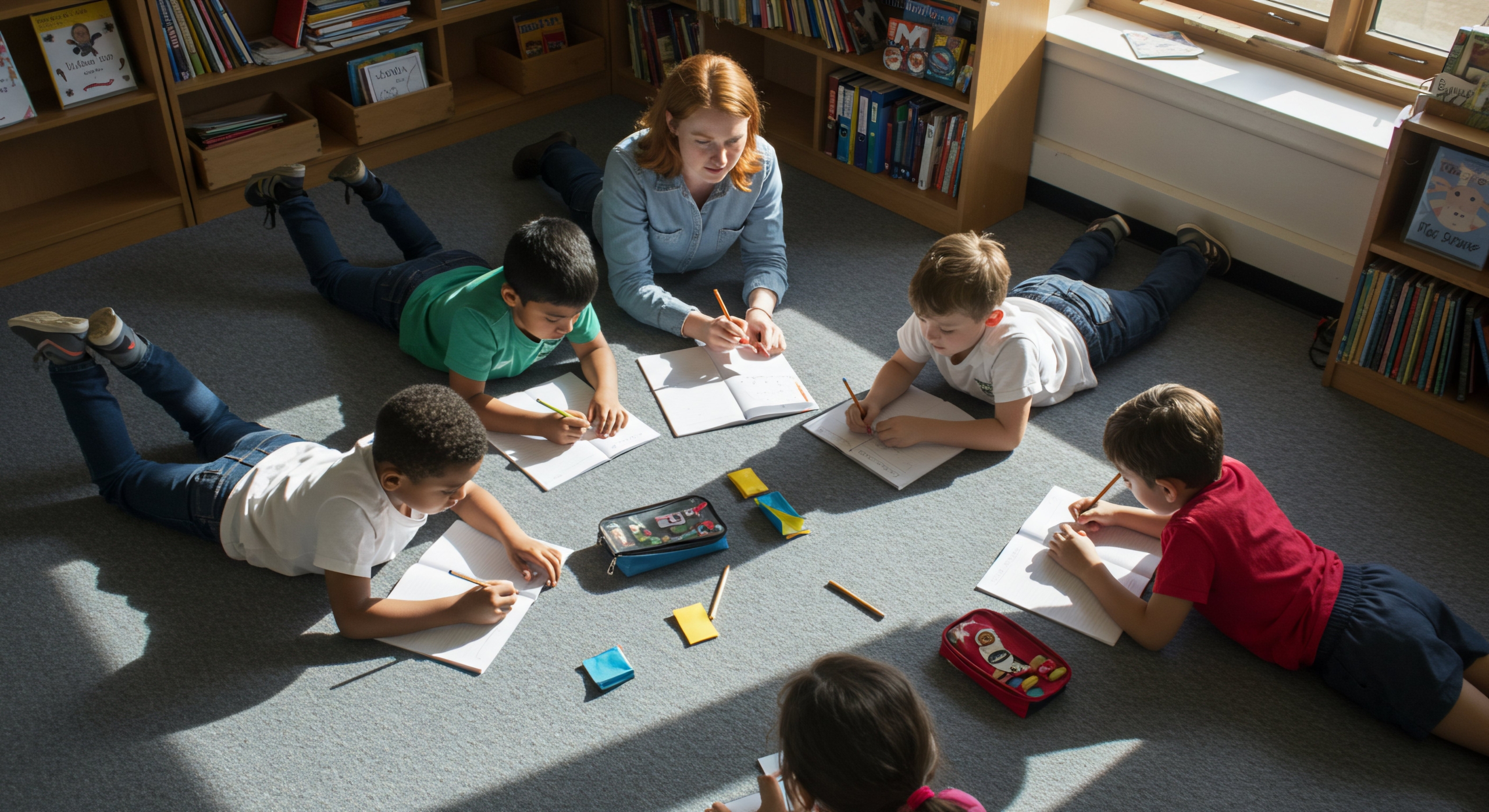
We don’t treat emotional growth as a separate subject, and we don’t manage it through compliance. It’s woven through the ordinary hours of the day. Inspired by the Reggio Emilia approach, our classrooms are built to make room for a child’s emotional voice:
- Conflict as curriculum. A disagreement over a truck isn’t a disruption to get past. It’s the richest social-emotional learning available, and teachers guide children through it—helping each one say what they feel and hear what the other said.
- Rooms that let a child breathe. Alongside the messy, active spaces for art and sensory play, we build cozy corners where a child can go look at a book and reset when the day gets loud.
- Patience over timelines. A child can be ahead in language and still need real help with sharing. That’s not a problem to solve. That’s a four-year-old.
A gentle reminder for the road
Emotional growth is not linear. Your preschooler may sail through a hard transition one week and fall apart over a changed routine the next. Both are normal, and neither is a verdict on your parenting.
What helps most isn’t a technique. It’s patience, steady presence, and the security of knowing that big feelings won’t cost them your calm. That’s what lets a child grow into someone resilient, kind, and sure of themselves.
Curious what this looks like in a classroom? We’d love to show you. Meaningful Beginnings serves families at our Taraval and Laguna Honda campuses in San Francisco, and at our San Mateo center on the Peninsula. Schedule a tour bring your questions.
More reading: How to support your child’s emotional health · Parenting with gentle discipline · The power of praise and encouragement
Frequently Asked Questions
What’s the difference between a tantrum and emotional dysregulation?
A tantrum is short-term and developmentally normal—a child expressing frustration or reaching for some control. Dysregulation describes difficulty managing emotions that is frequent, intense, and lasting, and that consistently gets in the way of playing, joining in, or settling down even with adult help. ZERO TO THREE offers a useful rule of thumb: it’s worth talking to a child development professional when the behavior is getting in the way of a child’s ability to connect with others or to explore and learn or when you find yourself skipping playdates and outings because of it.
How do Reggio Emilia–inspired preschools handle discipline?
Through co-regulation rather than isolation. Instead of traditional time-outs, teachers stay close and help a child name what they’re feeling, understand how it landed on someone else, and take part in making it right. The goal isn’t compliance in the moment, it’s a child who can eventually do this without an adult nearby.
When should I be concerned about my preschooler’s emotional development?
Every child moves at their own pace, so trust patterns over single hard days. It’s worth a conversation with your pediatrician if you see persistent extreme aggression, real difficulty connecting with other children, separation anxiety that doesn’t ease over months, or a sudden loss of skills your child already had. The CDC’s Learn the Signs. Act Early. milestone lists are a good, non-alarming place to start and asking early is never an overreaction.
About the Author:
This article was written by the Meaningful Beginnings Education Team. Our educators are dedicated to creating nurturing, Reggio Emilia–inspired environments where children are seen as capable, curious, and full of potential. Through thoughtful observation, collaboration, and meaningful experiences, we support each child’s growth—socially, emotionally, and intellectually—while partnering closely with families every step of the way.