You know the moment. You’re mid-task — dinner on the stove, laptop open, one eye on the toddler, when a small voice announces: “I’m boooored.”
The instinct is immediate: reach for a screen, offer a snack, suggest a craft. Anything to fix it. It’s completely understandable. Bay Area and Peninsula parents are pulled in a hundred directions, and heading off a whine feels like the fastest path back to peace.
But at Meaningful Beginnings, a Reggio Emilia–inspired program in San Mateo, we’ve come to see those two words differently. When a child says “I’m bored,” they’re often standing at the edge of something wonderful, a moment where curiosity, creativity, and independence can take root, if we let them.
Why Boredom Is a Gift in Disguise
When children have nothing planned for them, their brains switch on in a different way. Instead of following someone else’s story, they start writing their own. A stack of cushions becomes a rocket ship. A pile of leaves becomes soup. A cardboard tube becomes a telescope, then a sword, then a microphone.
This is where real growth happens:
- Creativity: With no rules to follow, kids invent them
- Problem-solving: “What should I do now?” is one of the most useful
questions a young child can wrestle with - Emotional regulation: Sitting through the discomfort of “nothing to do” builds
patience that lasts - Independence: Kids who learn to navigate their own downtime become
adults who can
What We See in Our Classrooms
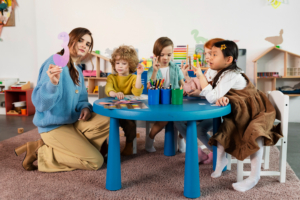
In our infant, toddler, and preschool rooms, we deliberately build in space for open-ended, child-led play. Our shelves are stocked with materials that have no single “correct” use: wooden blocks, fabric scraps, natural elements, open art supplies.
One of our favorites is nature potions, children mixing leaves, flowers, and spices in little bowls, stirring, pretending, and testing what happens when different ingredients meet. There’s no recipe. There’s no right answer. Just curiosity and a lot of joyful concentration.
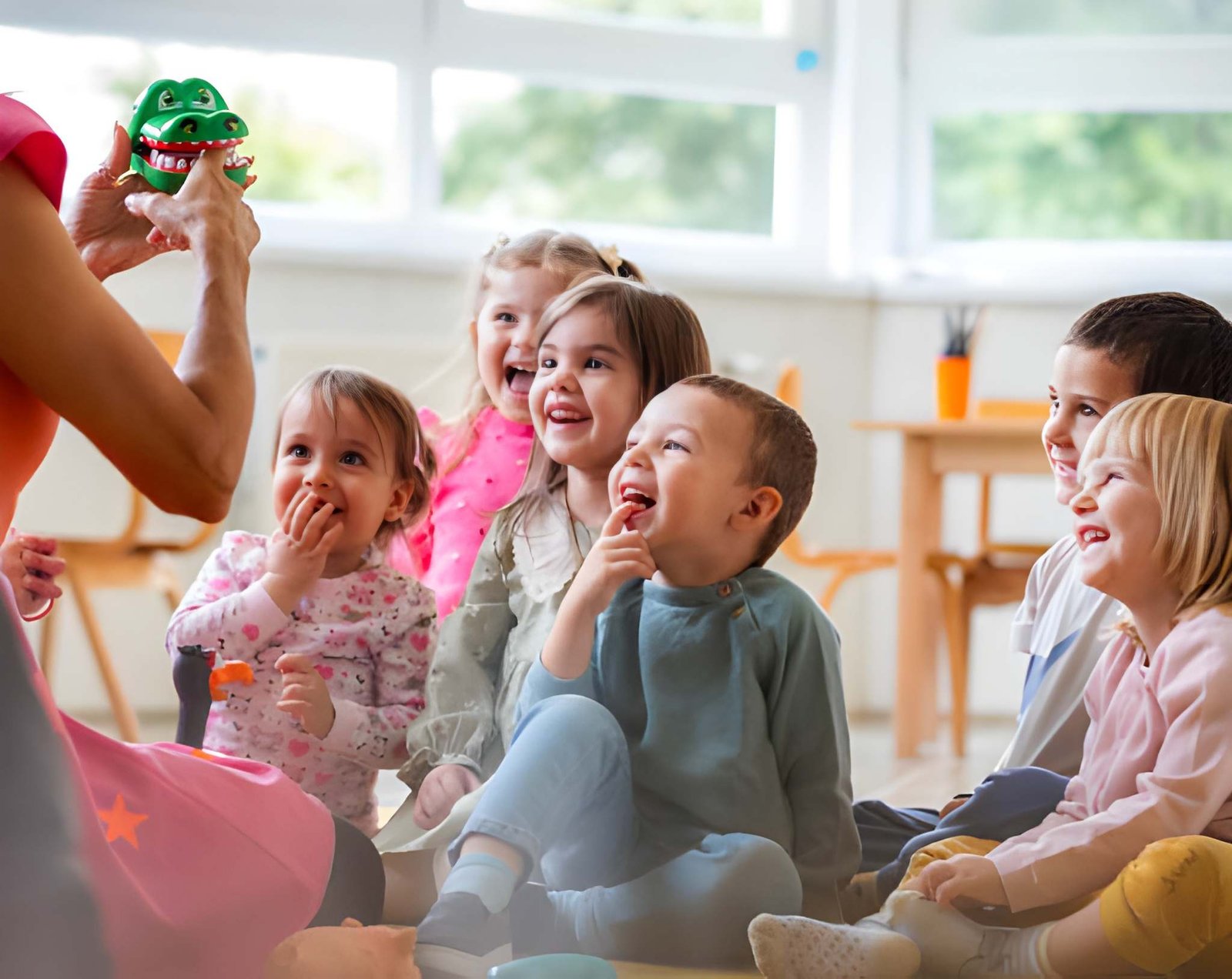
When a child gets stuck, our teachers don’t jump in with an activity. They offer gentle support and redirection, a question, a new material, a quiet suggestion, and then step back. That balance between support and space is where creative confidence grows.
How to Try It at Home
You don’t need a Reggio classroom to give your child the gift of unstructured time. A few gentle shifts do most of the work:
Pause before you rescue. When you hear “I’m bored,” try responding with warmth instead of a list of activities: “It’s okay to feel that way. I wonder what your brain will come up with?” Then give it a few minutes.
Set up a “yes” corner. Keep a basket or shelf of open-ended materials your child can reach anytime, paper, tape, crayons, blocks, fabric scraps, smooth stones, pinecones. The magic is in the variety and the freedom.
Head outside. A backyard, a stoop, Golden Gate Park, or any neighborhood green space along the Peninsula, nature does most of the work for you. Sticks, leaves, dirt, and puddles are the original open-ended materials.
Model it. Kids notice when we reach for our phones the second things get quiet. Sitting on the porch with a coffee, staring into the middle distance, is a lesson too. Come See It in Action
Watching our teachers and children move through a day of open-ended play says more than any blog post can. Come visit.
Schedule a tour: meaningfulbeginnings.org/schedule-tour
Email us: enrollments@meaningfulbeginnings.org
We’d love to meet you and your little one.
Frequently Asked Questions
Isn’t some boredom just whining?
Sometimes, yes — and that’s okay. Whining is often the doorway to real play. If you can sit through the first few minutes without rescuing, most children find their way into something creative on their own.
How long should I let my child sit in boredom?
There’s no strict rule. A few minutes is usually enough for young children to move past the “I don’t know what to do” phase and into imaginative play.
What if my child gets truly stuck?
That’s a great moment to do what our teachers do: offer a quiet nudge or a new material, then step back. You’re not solving it for them — you’re helping them find their own way in.
Does this work for toddlers, or just older kids?
It works at every age. Even infants benefit from unhurried, screen-free time to explore textures, sounds, and their own hands. The materials change, but the principle stays the same.
About the Author:
This article was written by the Meaningful Beginnings Education Team. Founded in 2013, we’re a Reggio Emilia–inspired early childhood program with locations in San Mateo and San Francisco, serving infants, toddlers, and preschoolers across the Peninsula and Bay Area. Our educators are dedicated to creating nurturing environments where children are seen as capable, curious, and full of potential. Through thoughtful observation, collaboration, and meaningful experiences, we support each child’s growth — socially, emotionally, and intellectually — while partnering closely with families every step of the way.