Looking for a Reggio Emilia preschool in San Francisco? Here are the things to notice when you walk into a classroom.
When families begin searching for daycare or preschool in San Francisco, it is easy to compare programs based on tuition, hours, location, and availability.
But once you step inside a classroom, there is another important question to ask:
What does this environment tell you about how children learn?
In the Reggio Emilia approach, the environment is often described as the “third teacher.” The idea is that the physical space can actively support children’s curiosity, independence, relationships, and learning.
For families touring a Reggio Emilia-inspired preschool in San Francisco, this can be a useful way to look beyond appearances and understand what happens inside a classroom.
Here are seven things to look for during your next daycare tour.
What Does “Environment as the Third Teacher” Mean?
The idea of the environment as a teacher is closely associated with the Reggio Emilia educational philosophy and the work of Loris Malaguzzi, a central figure in the development of Reggio Emilia’s municipal early childhood programs.
Malaguzzi’s thinking emphasized children as capable, curious learners and gave significant importance to the relationships between children, teachers, families, and their surroundings.
Today, the Reggio Emilia Approach identifies the environment as an educator alongside other important elements of the approach.
At Meaningful Beginnings, our Reggio Emilia-inspired classroom approach is designed around the idea that children’s surroundings should support exploration, decision-making, relationships, and whole-child development.
For parents, the concept is simple to observe:
Don’t just look at what is inside the classroom. Look at what the classroom makes possible.
1. Can Children Reach and Explore Materials?
One of the first things to notice during a daycare tour is whether children can meaningfully interact with the materials around them.
Are some materials within children’s reach?
Can children make appropriate choices about what they want to explore?
Are materials organized so children can understand where things belong?
A thoughtfully arranged environment can encourage children to become more independent. Instead of waiting for an adult to provide every material, children can participate more actively in their own learning.
Of course, accessibility should always be appropriate for a child’s age and developmental stage. Teachers still have an important role in selecting materials and maintaining a safe environment.
When you tour a San Francisco daycare, look for the balance between freedom to explore and thoughtful guidance.
2.Does the Classroom Show Evidence of Children’s Ideas?
A learning environment should tell you something about the children who spend time there.
Look at the walls, shelves, displays, and documentation.
Do you see children’s artwork?
Are projects displayed?
Are photographs or observations used to show how an experience developed?
Do children’s questions and ideas appear to influence what happens in the classroom?
In Reggio Emilia-inspired environments, documentation can make children’s learning processes visible. A child’s work is not simply something that is completed and put away. It can become part of an ongoing conversation about what the child is thinking, discovering, and trying to understand.
Your ideas matter here.
3. Are the Materials Open-Ended?
Another thing parents can look for is the type of materials children are invited to use.
Some materials have one obvious purpose. Others can be used in many different ways.
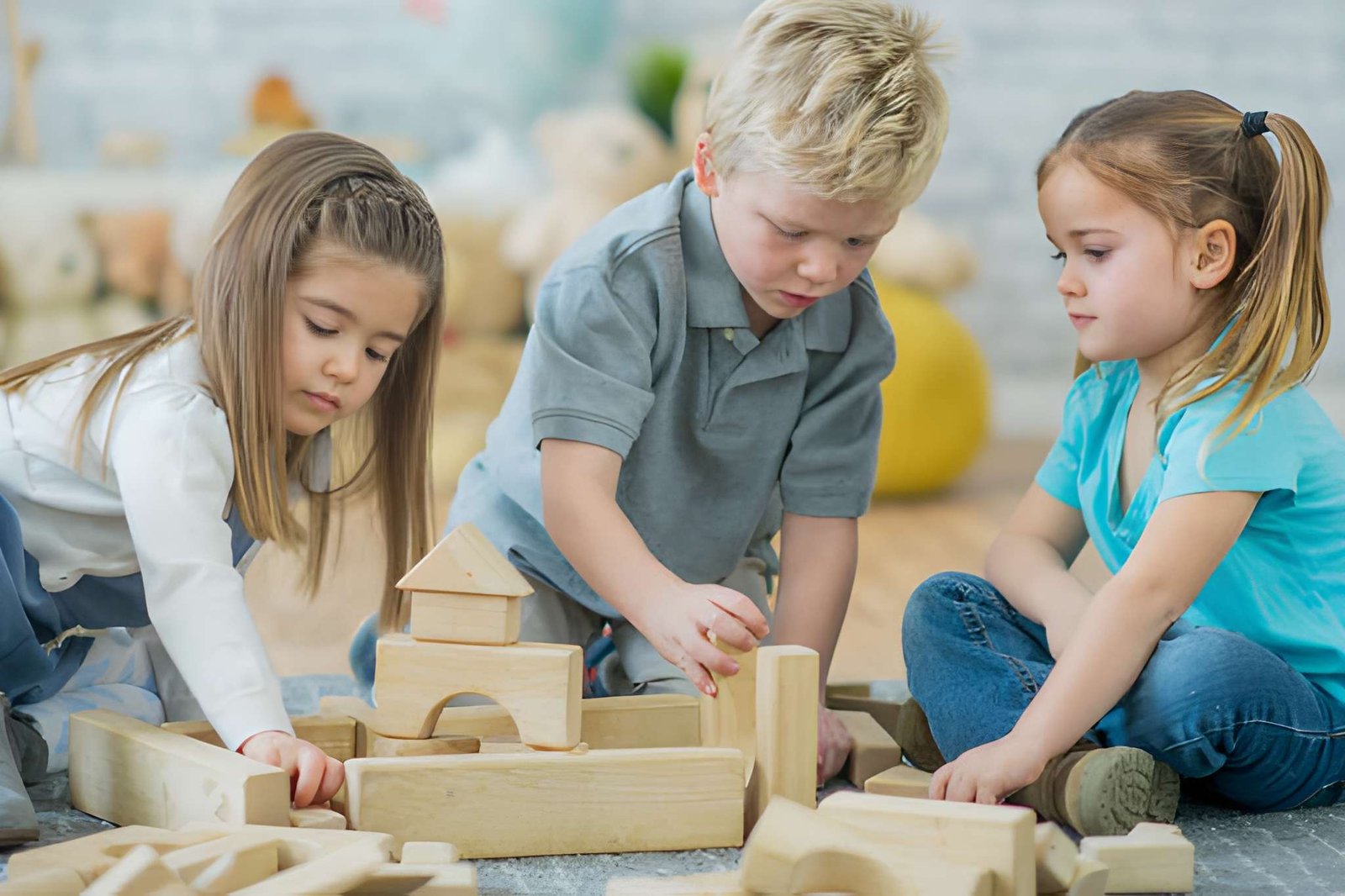
A collection of blocks can become a building, a bridge, a road, or something entirely different. Natural materials can inspire children to compare, sort, create, investigate, and communicate.
4.Does Space Support Both Independence and Connection?
Children need opportunities to explore independently, but they also need opportunities to connect with teachers and other children.
Look around the classroom.
Are there spaces where children can work together?
Are there areas where they can focus more quietly?
Can teachers easily observe and interact with children?
Does the arrangement encourage conversation and collaboration?
A strong learning environment does not force every child into the same experience at the same time. Instead, it can support different ways of participating.
A child might investigate something independently before bringing an idea to a teacher. Another child might prefer to work alongside a friend.
The environment can give both experiences room to happen.
5. Does the Environment Change With the Children?
A Reggio Emilia-inspired learning environment is not necessarily static.
Children’s questions, interests, and discoveries can influence what happens next.
Imagine, for example, that children become fascinated by insects they discover outdoors. Teachers might introduce books, drawing materials, natural objects, observation opportunities, or new questions connected to that interest.
The classroom can evolve alongside the children’s thinking.
This is where observation becomes especially important.
6. Do Teachers Work With the Environment?
The “third teacher” does not replace the adults in the classroom.
Teachers remain an essential part of the learning experience.
In a Reggio Emilia-inspired environment, educators can take on the role of co-learners. They observe, ask questions, investigate alongside children, and use what they discover to inform future experiences.
Watch the teachers during your tour.
Do they listen to children’s ideas?
Do they ask open-ended questions?
Do they give children time to investigate?
Do they encourage children to explain their thinking?
Do they appear genuinely interested in what children are discovering?
A beautiful classroom is only one part of the equation. What matters is how teachers and children use the space together.
7. Does the Environment Feel Welcoming to Families?
A childcare environment should feel welcoming not only to children, but also to the families who are part of their community.
When touring a daycare in San Francisco, consider the overall feeling of the space.
Are families welcomed when they arrive?
Do teachers make time to communicate with parents?
Are children’s experiences and development shared with families?
Does the environment feel warm, respectful, and connected?
At Meaningful Beginnings, our philosophy emphasizes creating a safe and inclusive space where children, families, and educators come together to support children’s development.
That relationship matters because early childhood education works best when families and educators can work together.
At Meaningful Beginnings, nature is also incorporated into children’s learning experiences. Our article Using Nature as an Artistic Medium with Young Children explores how natural materials can become opportunities for creativity and investigation.
During your tour, ask: “What kinds of materials do children have access to, and how do teachers decide what to introduce?”
The answer can tell you a lot about how the program approaches learning.
At Meaningful Beginnings, observation is used to understand children’s individual interests, strengths, and learning journeys. You can learn more about this approach in Why Observation Is a Powerful Learning Tool in Early Childhood Education.
During a tour, ask: “How do you use children’s interests to plan future learning experiences?”
That question can reveal whether the classroom is simply following a fixed schedule or whether teachers are paying close attention to the children in front of them.
Meaningful Beginnings explores the teacher role further in The Teacher’s Role as a Co-Learner in Early Childhood Education.
A beautiful classroom is only one part of the equation. What matters is how teachers and children use the space together.
A Real Example: Look at What Children Are Actually Doing
When you visit a Meaningful Beginnings classroom, don’t only look at the furniture or decorations.
Look at the children.
You might notice children choosing materials, working alongside classmates, investigating something that caught their attention, or returning to an idea they explored earlier.
You may also notice how teachers respond to those moments.
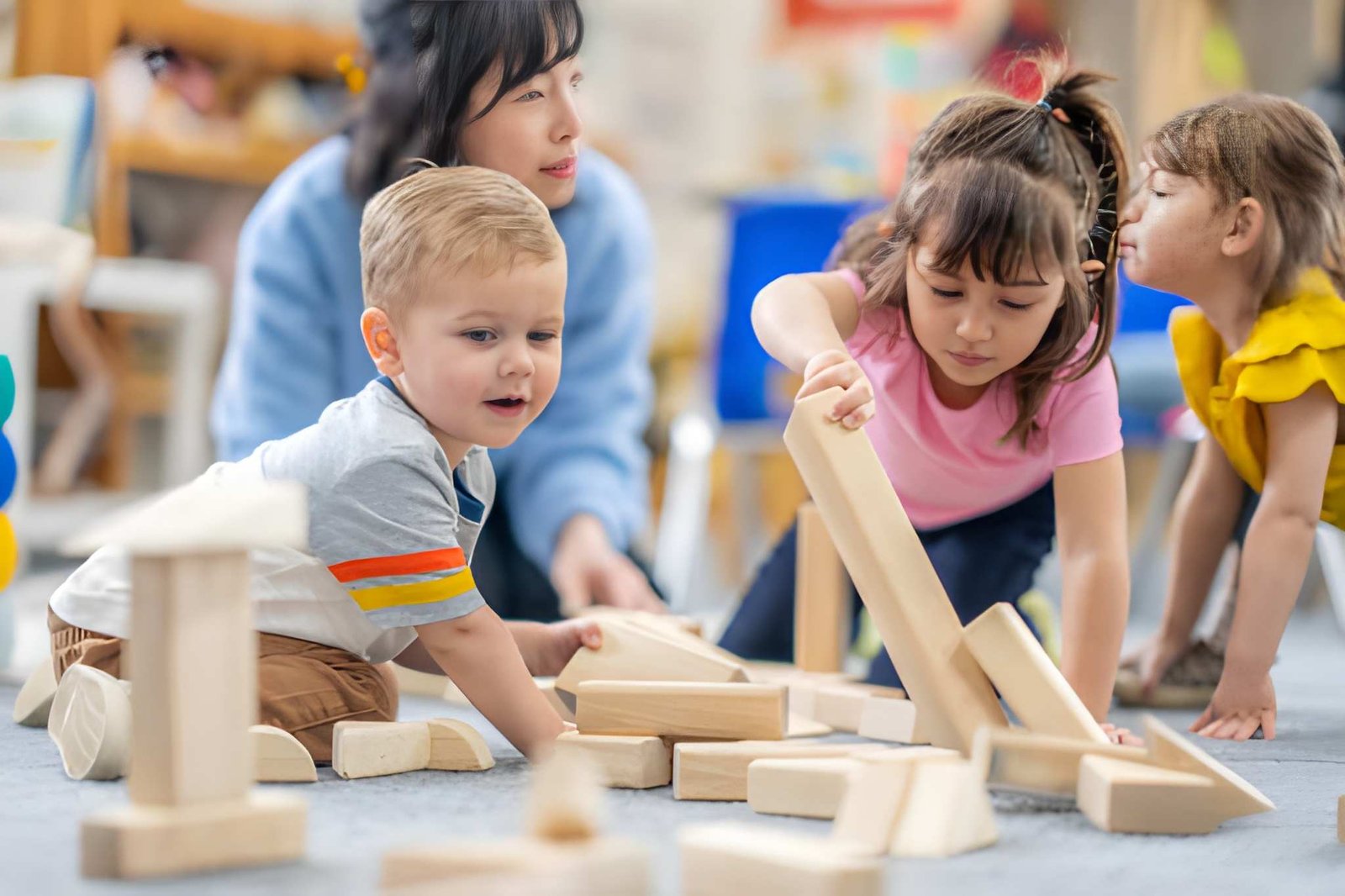
For this article, use an actual photo from one of the San Francisco classrooms rather than a stock image. A real classroom image gives prospective families a more authentic sense of the environment they could experience during a tour.
Meaningful Beginnings currently has two San Francisco locations: 633 Taraval St. and 254 Laguna Honda Blvd. Explore Meaningful Beginnings locations to learn more.
Questions Parents Can Ask During a Daycare Tour
Once you start looking at the classroom through the lens of the “third teacher,” your tour questions can become more specific.
How do you decide which materials are available to children?
How do teachers respond when children become interested in a particular topic?
How do you document children’s learning?
How does the classroom change throughout the year?
How do you encourage age-appropriate independence?
How do teachers use observation to plan learning experiences?
How do children work together?
How do families become part of the learning community?
How does your Reggio Emilia-inspired approach show up in the classroom?
These questions can help you understand what happens behind the classroom walls—not just what the space looks like.
For Educators: Think About What Your Environment Communicates
The environment as the third teacher is also an important idea for early childhood educators.
Before changing a classroom, take a moment to consider what the current environment communicates to children.
Does it communicate that children are capable?
Does it encourage children to make choices?
Can children see evidence of their own thinking and work?
Are materials intentionally arranged to invite investigation?
Are there spaces for collaboration as well as quieter experiences?
Most importantly, does the environment reflect your image of the child?
At Meaningful Beginnings, our educators take an active role in observing children and adapting learning opportunities based on their needs and interests. Our article The Teacher’s Role as a Co-Learner in Early Childhood Education explores how educators can participate in children’s discoveries rather than simply directing them.
For teachers, the “third teacher” is therefore not just about classroom design. It is about asking how space, materials, documentation, relationships, and children’s ideas work together to support learning.
Look Beyond a “Beautiful” Classroom
A thoughtfully designed classroom can certainly be inviting, but the most important question is not whether a space looks beautiful.
Ask what the environment allows children to do.
Can they explore?
Can they make choices?
Can they communicate their ideas?
Can they work with others?
Can they revisit an experience?
Can their interests influence what happens next?
That is where the idea of the environment as the third teacher becomes meaningful.
For parents searching for a Reggio Emilia preschool in San Francisco, this perspective can provide another way to compare programs.
Instead of simply asking, “Does this classroom look nice?” ask:
“What is this environment helping my child become?”
How Meaningful Beginnings Approaches the Learning Environment
At Meaningful Beginnings, our San Francisco classrooms are inspired by the Reggio Emilia approach and designed to support children’s curiosity, confidence, independence, and holistic development.
Our classroom programs include experiences such as STEM exploration, creative arts, language learning, and outdoor and sensory experiences. Daily schedules are treated as guidelines, with activities able to vary in response to children’s needs and interests.
If you are looking for a Reggio Emilia-inspired daycare or preschool in San Francisco, you can explore our San Francisco locations to learn more about our centers and programs.
You can also schedule a tour and experience a Meaningful Beginnings classroom in person.
A Meaningful Beginning Starts With the Right Environment
Choosing childcare is a deeply personal decision. Every family has different needs, and every child is different.
As you visit San Francisco daycare and preschool programs, take time to look beyond the furniture, decorations, and activity stations.
Watch how children interact with the space.
Listen to how teachers respond to their ideas.
Notice whether the environment encourages curiosity, independence, connection, and exploration.
Because sometimes, the classroom itself can tell you a great deal about how a childcare center sees children.
Author: Meaningful Beginnings Education Team