In the early years of childhood, learning doesn’t happen through memorization—it happens through exploration, creativity, and meaningful experiences.
At Meaningful Beginnings, we believe children learn best when they are actively engaged—using their hands, their senses, and their imagination to make sense of the world around them. Much like our approach to co-learning, where teachers and children discover together, art and music provide powerful opportunities for children to explore, think, and grow.
For families seeking a nurturing, play-based preschool in San Francisco or San Mateo, creative expression is more than just a fun activity—it is a foundational part of how young children develop confidence, communication skills, and critical thinking.
The Science Behind Creativity and Brain Development
When children engage in art and music, their brains are highly active—building connections that support learning across multiple areas of development.
Creative experiences engage both sides of the brain:
- The left side supports language, sequencing, and logical thinking
- The right side supports creativity, emotion, and spatial awareness
As these areas work together, children begin to form strong neural connections that support:
- Memory and information retention
- Focus and attention
- Problem-solving abilities
- Flexible and creative thinking
Research from the Harvard Center on the Developing Child highlights that early experiences—especially those involving sensory exploration, movement, and creativity—play a critical role in building strong brain architecture.
More importantly, these experiences help children learn how to think. Through art and music, children begin to ask questions, test ideas, and discover answers on their own laying the foundation for critical thinking and lifelong learning.
How Music Supports Thinking and Learning
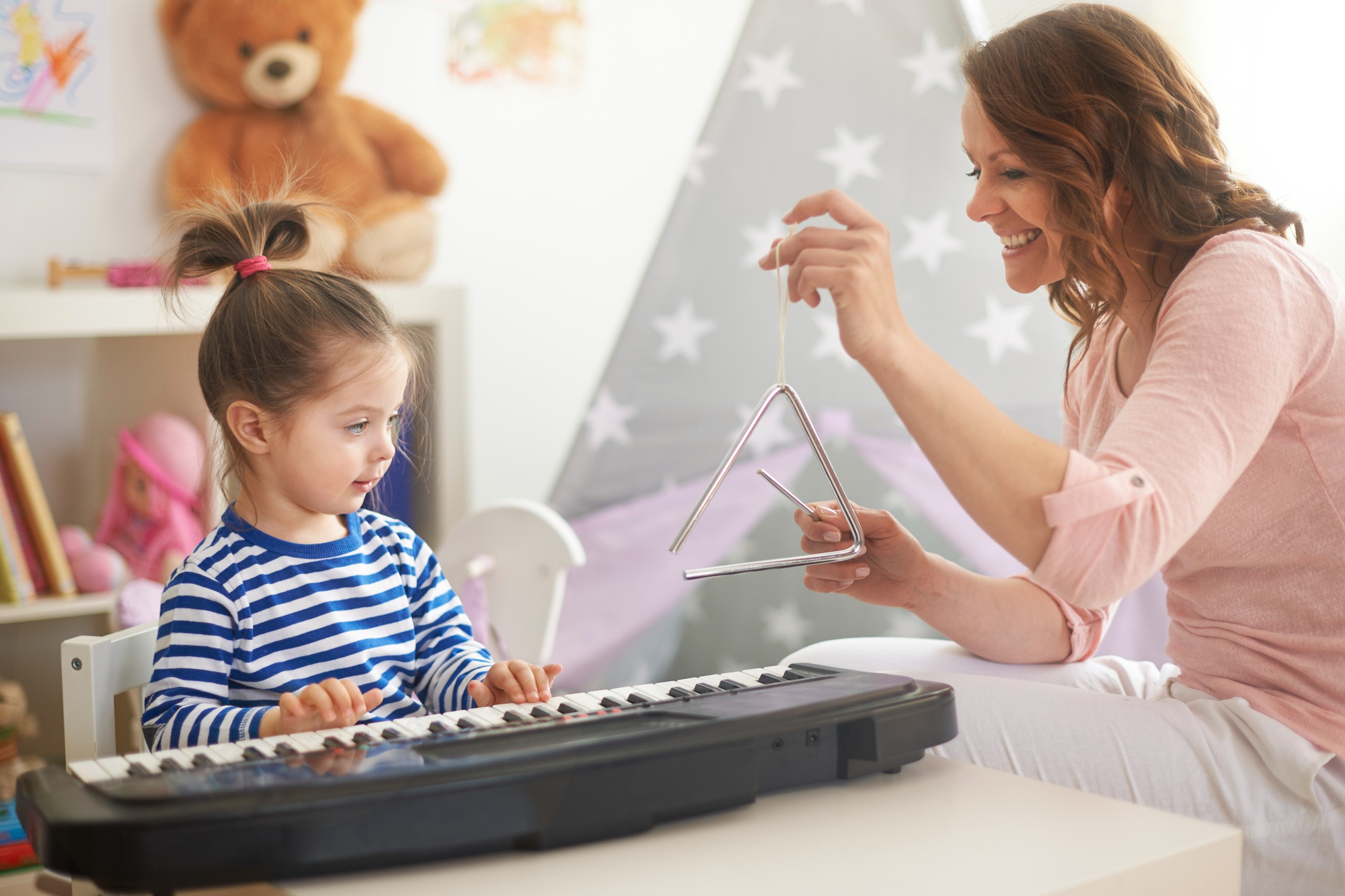
Music is one of the most natural and engaging ways young children learn.
When children sing, move, and explore sound, they are doing much more than participating—they are experimenting, predicting, and noticing patterns.
Music supports:
- Language development through rhythm, rhyme, and repetition
- Listening skills and concentration
- Motor coordination through movement and dance
- Pattern recognition, which supports early math and reading
- Emotional expression and self-regulation
As children explore music, they begin to understand cause and effect:
- “What happens if I clap faster?”
- “What changes when I sing louder or softer?”
These moments of exploration build both confidence and critical thinking, as children connect their actions to outcomes.
Organizations like the National Association for the Education of Young Children (NAEYC) emphasize that music and movement experiences support not only language development, but also self-regulation and cognitive growth in early childhood.
At Meaningful Beginnings, music is woven throughout the day from transitions and group time to movement-based exploration—allowing children to experience learning through their whole bodies.
How Art Builds Creativity and Critical Thinking
Art offers children a way to express ideas long before they can fully communicate them with words.
Whether painting, drawing, sculpting, or building, children are constantly making decisions, solving problems, and exploring possibilities.
Art supports:
- Fine motor development through hands-on creation
- Visual-spatial awareness through shapes, colors, and design
- Creative thinking and imagination
- Decision-making and problem-solving
- Emotional awareness and self-expression
In our Reggio Emilia–inspired classrooms, art is not about creating a perfect final product. Instead, we focus on the process—how children explore, think, and make meaning.
A simple painting activity might become an opportunity to ask:
- “What happens if we mix these colors?”
- “How can we make this stand up?”
- “What could we try differently?”
Through this process, children learn to experiment, reflect, and discover—building the foundation for independent thinking.
Creativity as a Pathway to Critical Thinking
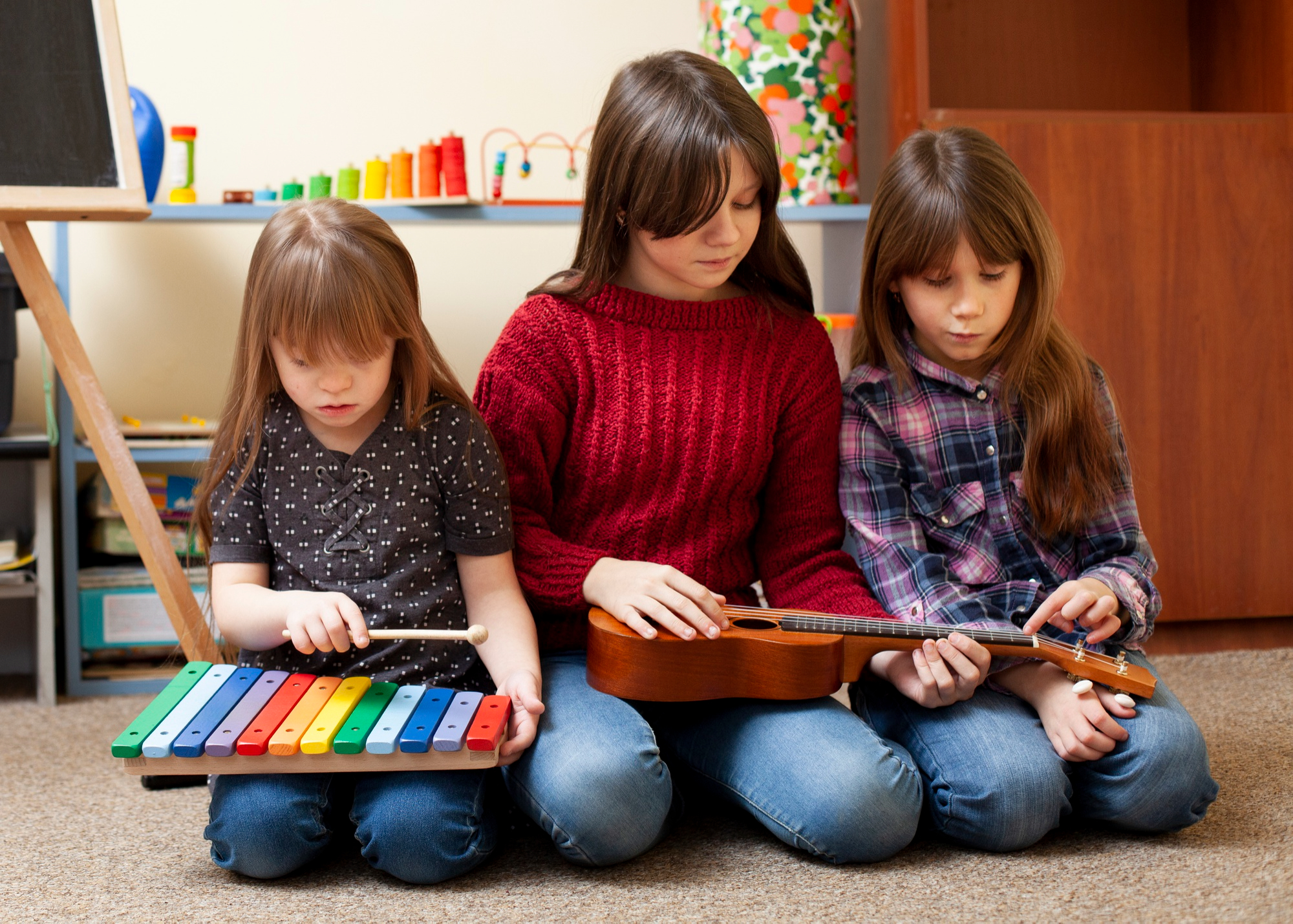
Just like in co-learning environments where teachers guide rather than direct, creative experiences encourage children to become active participants in their own learning.
Instead of being told what to do, children are invited to:
- Ask questions
- Test ideas
- Make predictions
- Adjust their approach
- Discover answers through experience
Research in early childhood education consistently shows that children develop a deeper understanding when they are actively engaged in exploration rather than passively receiving information.
This process helps children become confident thinkers who are comfortable exploring new ideas and solving problems.
Over time, they begin to trust their own thinking—a critical skill that supports success far beyond the classroom.
Read our recent article: Teacher To Child Ratio (What is Allowed in California 2026)
How Families Can Support Creativity and Thinking at Home
Families play an important role in extending this learning beyond the classroom.
Small, everyday interactions can make a big impact on how children think and learn.
Here are simple ways to support your child at home:
Ask open-ended questions
Instead of “What is it?” try:
“What can you tell me about what you made?”
Focus on the process, not the product
“How did you make that?”
“What was your idea?”
Pause before giving answers
When your child asks a question, try:
“What do you think?” or “How could we find out?”
Encourage experimentation
Provide materials without instructions and allow children to explore freely.
Embrace messy learning
Creativity can look unstructured—but it’s often where the deepest learning happens.
These small moments help children build confidence, curiosity, and the ability to
think independently.
See our early learning center in San Mateo.
Why Creativity Matters for Lifelong Learning
While academic readiness is often a focus for families, research consistently shows that creativity plays a key role in preparing children for long-term success.
According to organizations like NAEYC and Zero to Three, play-based and creative learning experiences support the development of critical thinking, problem-solving, and social-emotional skills that children carry with them into school and beyond.
Through art and music, children learn to:
- Think critically and solve problems
- Express themselves with confidence
- Adapt and try new ideas
- Stay curious and engaged in learning
Most importantly, creative experiences bring joy—and joy is one of the strongest drivers of meaningful, lasting learning.
How Creativity Comes to Life at Meaningful Beginnings
At Meaningful Beginnings, creativity is not treated as a separate activity—it is woven into the rhythm of each day and into how children learn, explore, and make meaning of the world around them.
Through our Reggio Emilia–inspired approach, art and music become powerful tools for thinking, discovery, and connection.
Children experience:
- Open-ended art materials that invite exploration and experimentation
- Daily music and movement that engage the body and mind
- Nature-inspired creative experiences connected to outdoor learning
- Musical storytelling, rhythm play, and imaginative expression
- Collaborative projects that encourage communication and shared discovery
In these moments, children are not simply participating—they are asking questions, testing ideas, solving problems, and expressing their thinking in meaningful ways.
Our teachers act as co-learners, observing closely, asking thoughtful questions, and supporting children as they explore their ideas. This process helps children build confidence in their thinking while developing the critical thinking skills that support lifelong learning.
For families in San Francisco, San Mateo, and across the Bay Area, this means your child is part of a learning environment that values creativity, curiosity, and connection—while nurturing the whole child: socially, emotionally, and intellectually.
If you’re looking for a preschool where creativity supports not just self-expression, but also problem-solving, confidence, and a love of learning, we invite you to experience Meaningful Beginnings.
Schedule a tour or join our waitlist to learn more about our programs.
About the Author:
This article was written by the Meaningful Beginnings Education Team. Our educators are dedicated to creating nurturing, Reggio Emilia–inspired environments where children are seen as capable, curious, and full of potential. Through thoughtful observation, collaboration, and meaningful experiences, we support each child’s growth—socially, emotionally, and intellectually—while partnering closely with families every step of the way